


AI agents
RAG agent over the company's own knowledge
Crassula
A retrieval-based agent that answers from the company's own documents and data rather than from a general-purpose model.
European client
We take the process apart, build the agent for it and run it inside your own infrastructure: roles, spend limits, mandatory approvals and an audit trail of every action.
30 minutes, no deck, NDA if you need one. You describe the process; we work out how many people and hours it burns today, what can come off and what should stay manual. If it is not worth automating, we say so.
The team has worked with
Selected work
Integrations, data and infrastructure are exactly where AI projects fall apart. We were doing that work long before anyone called it AI adoption.
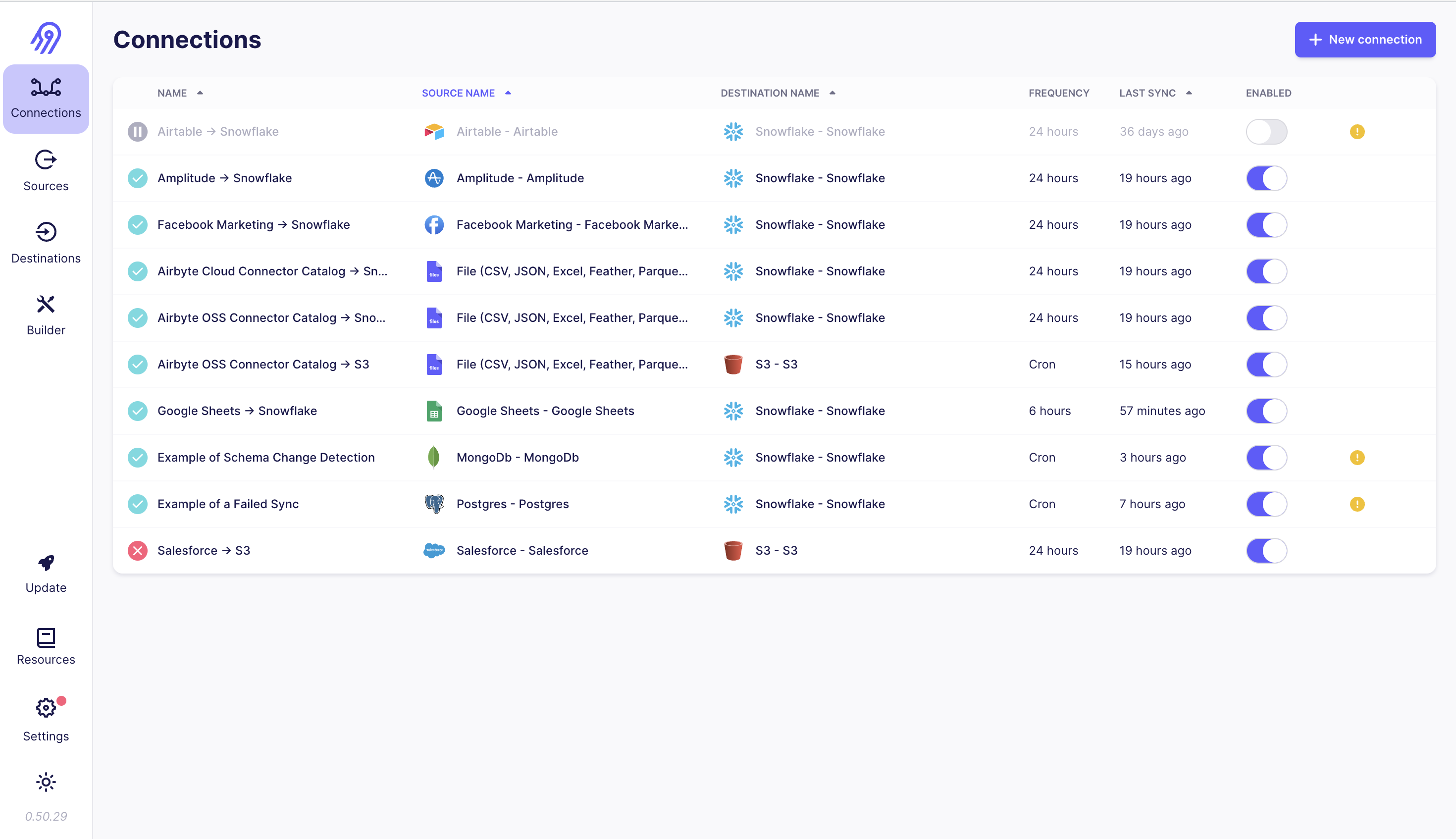

Airbyte
A connector-heavy data platform used by hundreds of engineering teams, where a broken sync is visible the same day.
YC W20 · 300+ connectorsCrassula
A retrieval-based agent that answers from the company's own documents and data rather than from a general-purpose model.
European client

Aleph Zero
Cryptography and consensus with sub-second finality, in a system where a mistake costs users money directly.
Sub-second finalityA contract travels through a chain of messages, and only the last person to reply knows where it stands.
Someone opens two systems side by side and retypes rows. By evening one of them already holds different numbers.
The cloud service passed every demo and stopped at the security review.
The pilot was shown at a meeting, everyone nodded, and it never reached anyone's work.
We ask you to name an owner for the process on your side: someone who settles the open questions and signs off on each step.
What comes off your people
Not consulting, not development in general. One process, a fixed price, and a working system inside your own infrastructure. Then the next one.
A route instead of an email thread: roles, deadlines, owners. The system checks the paperwork is complete, compares terms against your template and escalates only what deviates. You can see who is sitting on a document and for how long.
Invoices, delivery notes, specifications, supplier mail. Data lands in your system of record without manual entry, and discrepancies get flagged before signature rather than after.
Scope and cost estimation, recurring reports and reconciliations — the work someone currently assembles by hand from three systems every Monday.
Our products
The three processes above are three products of ours that already run. AA.Docs routes approvals and reads the documents, Constract prices the work, and AgentArea keeps control underneath: roles, limits, approvals, audit. Your project does not start from an empty repository.
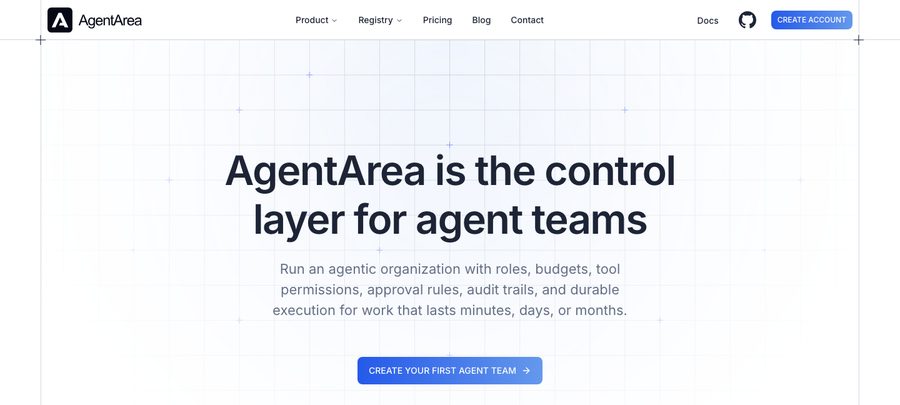 Platform · open source
The control layer for agent teams: roles, budget limits, approval rules, audit trails and 500+ tool integrations. Self-hosted, so the data never leaves your infrastructure.
 Runs on AgentArea
Document approval stops being an email thread. Contracts, invoices and specifications get a route, a deadline and an owner, while the agent reads the document, pulls out the data and flags the risks.
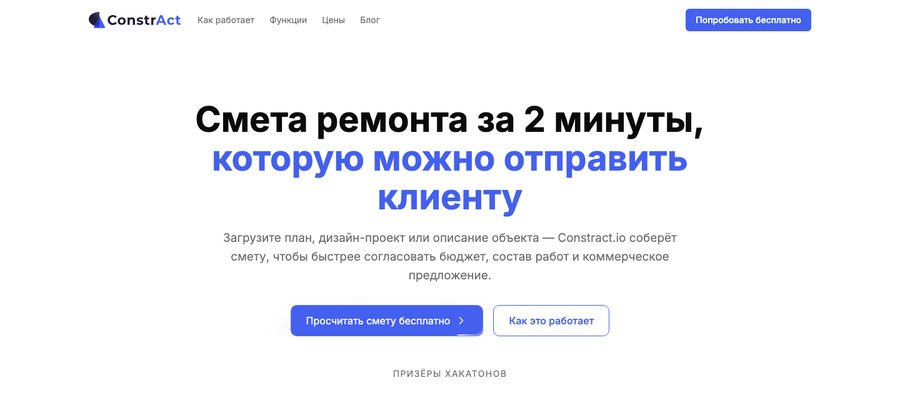 Runs on AgentArea
A renovation estimate in two minutes: floor plan in, materials, labour and a client-ready proposal out. Recalculates the moment the scope changes.
AgentArea is open source — read it before you talk to us: github.com/agentarea/agentarea
The questions a security team asks on the first call.
How a project runs
We take one process rather than the whole company. That is what makes a fixed price possible and lets you judge the result in two months instead of a year.
You walk us through the process as it works today. We tell you what an agent can take over and what it should not touch. Free.
We map three to five processes and count the people, hours and money each one costs. You get the numbers, an implementation plan and a working prototype of the first.
The system goes onto your servers: integrations with your CRM, ERP and document flow, access rights, an audit trail, spend limits and approval on expensive operations.
We watch quality in production, take on the next area, and train your team to run the system without us.
Agent University
We run AI agent courses at leading universities and inside corporate programmes. The material is about how agents work in general — architecture, tools, memory, evaluation and the point where an agent stops being the right answer — not about our stack.
Agent architecture, tool use and memory, orchestrating several agents, evaluation and observability. Every module ends in working code rather than slides.
How to size the economics of a process before automating it, which decisions an agent should never own, and how to brief a vendor and judge what comes back. For CTOs, COOs and process owners.
Your team takes one of your own processes to a working agent under our guidance. You end up with a live system and people who can build the next one without us.
An open Agent University platform is in the works. Join the waitlist · Talk about a corporate programme
What clients say
That matters most when you are letting an outside team into systems that are already live.
They had incredible responsiveness, a great understanding of what we want to do, and great autonomy.
 John LafleurCOO, Airbyte
Jamakase Labs showcases deep expertise in web and mobile applications, successfully addressing any challenges.
 Jonathan BenassayaCo-Founder of Deezer; now Senior Director of Product Management, Meta
I'm impressed by their ability to meet those changes on very short notice while keeping with deadlines.
 Andrew BondarenkoFounder & CEO, Oculisa
Straight answers
Yes. The platform and the models run on your own servers with no outbound calls. Updates and model weights move in whatever way your security team approves.
No. AgentArea is open source and runs in your own infrastructure, in your cloud or on-prem. The implementation code is yours. Your team or another vendor can maintain it: the platform is not our secret, our engineering around it is what you pay for.
Only if you want it to. The platform is self-hosted, and we can run open models inside your perimeter when sending data to an external provider is not an option.
No, that is the normal starting point. Cleaning up what the agent needs, and only that, is part of the audit and the build.
Scope and control. One process instead of a platform for everything, and an agent that runs with explicit roles, spend limits, approvals and an audit trail rather than on trust.
Either we do, or your team does. Handover and training are part of the engagement, and teaching engineers is something we do at universities and in corporate programmes anyway.
The first step is a free 30-minute call. After that comes a paid teardown at a fixed price, ending in a calculation, a plan and a prototype. We quote the build once the teardown shows the real scope, rather than guessing up front.
First step
30 minutes, no deck and no commitment. We work out how many people and hours the process burns today, what can come off and what should stay with humans. If the honest answer is that automating it does not pay, that is the answer you get.